


Finology
Every Futures fin, explained
Construction changes how a fin feels. Shape changes how a board turns. Pick both and you've picked your next fin — no guesswork, no clicking through ten product pages to find out.
The Ride Number
Futures rates every construction on a 1–10 scale, from fins that hold a predictable line to fins that generate speed and snap out of turns. Every card below shows where it sits.
Speed Control
Solid, engaged, predictable. Built for powerful conditions.
Balanced
All-around. Drive, hold and looseness in equal measure.
Speed Generating
Springy, fluid, responsive. Built to create speed from nothing.
Feel = Flex + Rake + Foil
How the Ride Number is calculated
Three physical properties of a fin combine to produce its Ride Number — and they're not weighted equally.
Flex
How much the fin bends under load. A softer, springier flex generates speed through a turn. A stiffer, more stable flex holds its line and controls speed instead. Flex carries the most weight in the Ride Number of any single factor.
Rake
The sweep of the fin, upright or laid-back. An upright rake feels pivoty and turns tight — a speed-generating trait. A laid-back rake feels stable and holds through long carves — a speed-control trait.
Foil
The fin's cross-section. A flat foil feels engaged and predictable through a turn — speed control. A V or V2 foil feels fluid and responsive — speed generating. The subtlest of the three, but still noticeable on the water.
Control Series
Traditional fiberglass
Solid fiberglass panels, CNC-cut and hand-finished. The toughest, most predictable option in the range and the easiest to sand back after a reef strike — built for surfers who want their fins to hold a line in powerful, heavy conditions.
Shop Control SeriesTechflex
Light like Honeycomb. Stiff like fiberglass.
A honeycomb core reinforced with 3K carbon along the base and tip. Stiff enough to stay engaged on big drops, light enough to stay responsive off the rail — the pick for powerful surfers who don't want to give up spring.
Shop TechflexHoneycomb
All-around performance
A lightweight hexagonal core drops weight without giving up stiffness where it counts. The standard upgrade fin — medium flex that drives down the line, holds through turns and boosts airs in almost any condition. Legacy Series is built on this construction.
Shop HoneycombAlpha NetPlus
Made from recycled fishing nets
A collaboration with Bureo — recycled fishing nets combined with carbon-and-air-infused Compound 6. A flat foil for a reliable, familiar feel in all conditions, with a lighter environmental footprint than a standard injection-moulded fin.
Shop AlphaBlackstix 4.0
Faster. Lighter. More responsive.
A precision carbon and fiberglass matrix with a V2 foil and lightweight epoxy resin. The V2 foil is concave at the base and flattens toward the tip, keeping speed through rail-to-rail transitions — Futures' liveliest, most responsive construction.
Shop BlackstixVapor Core
Handmade. Hollow. Weightless.
Instead of a foam core, Vapor Core removes the core entirely — a woven carbon exoskeleton pre-loaded under tension, handmade start to finish in California. Roughly 25% lighter than a moulded fin, for surfers who feel every gram.
Shop Vapor CoreLegacy Series
Legacy Series isn't a different material — it's Honeycomb construction, offered in three fin shapes so you can feel the difference shape alone makes. Every size in a template category shares the same surface area, so you get the true feel of that shape, not just a bigger or smaller fin.
Available in XSmall, Small, Medium and Large across all three templates.
Rake
Drawn-out · Drive
XS · S · M · L
Neutral
All-around · Fluid
XS · S · M · L
Pivot
Tight turns · Loose
XS · S · M · L
Shop by series & shape


Fin sizing
Sized to rider weight, not board length. Start here, then fine-tune with construction once you know your size.
Small
45 – 60kg
Medium
55 – 80kg
Large
75kg+
-
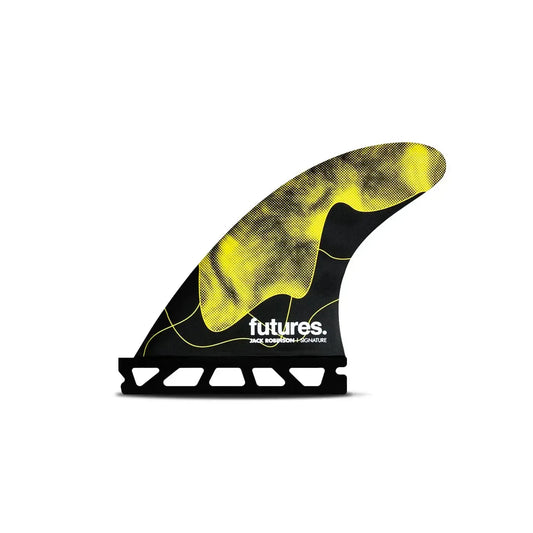
Futures Jack Robinson Grom HC Thruster Fins (XS) - Yellow
Vendor:FuturesRegular price $179.95 AUDRegular price -
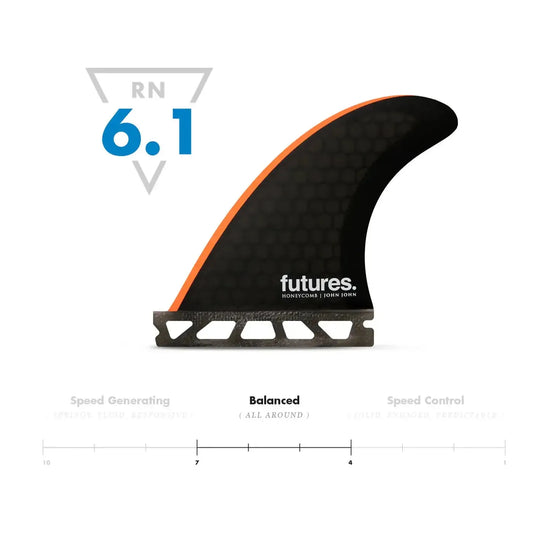
Futures John John Florence HC (Grom/XS) fins
Vendor:FuturesRegular price $179.95 AUDRegular price -
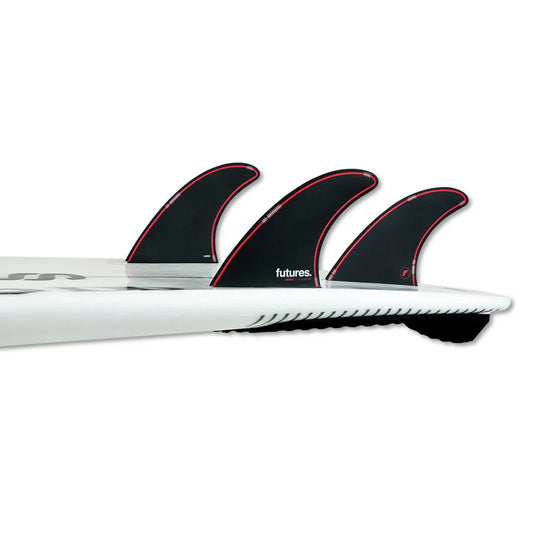
Future Jordy Smith Signature (M) Thruster Fins
Vendor:FuturesRegular price $179.95 AUDRegular price -
Futures Jordy Smith Signature (L) Thurster Fins
Vendor:FuturesRegular price $179.95 AUDRegular price -
 Sold out
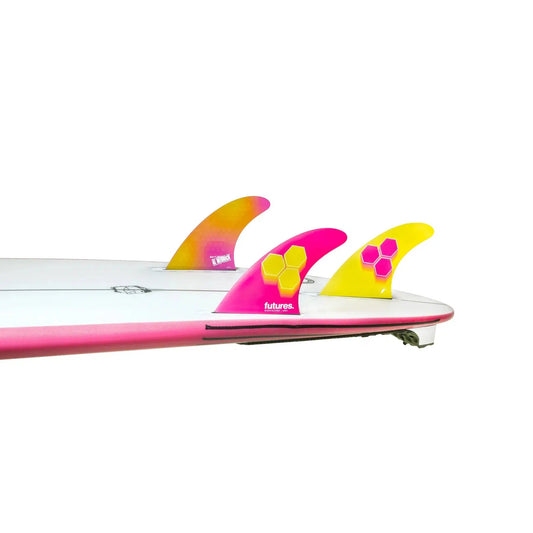
Futures Al Merrick Twin + 1 Fins
Vendor:FuturesRegular price $169.95 AUDRegular price -
Futures DHD Honeycomb Tri Surfboard Fins (M)
Vendor:FuturesRegular price $159.95 AUDRegular price -
Futures AM3 Honeycomb (S) Thruster Surfboard Fins
Vendor:FuturesRegular price $159.95 AUDRegular price -
Futures Sharpeye Tri Surfboard Fins (L)
Vendor:FuturesRegular price $159.95 AUDRegular price -
Futures AM2 Honeycomb (L) Thruster Surfboard Fins
Vendor:FuturesRegular price $159.95 AUDRegular price -
Futures AM1 Honeycomb (M) Thruster Surfboard Fins
Vendor:FuturesRegular price $159.95 AUDRegular price -
Futures DHD Honeycomb Tri Surfboard Fins (L)
Vendor:FuturesRegular price $159.09 AUDRegular price -
Futures F3 HC Legacy Thruster Grom Fins
Vendor:FuturesRegular price $149.95 AUDRegular price -
Futures P6 Legacy Series Fins - Pivot (M)
Vendor:FuturesRegular price $149.95 AUDRegular price -
Futures P8 Legacy Series Fins - Pivot (L)
Vendor:FuturesRegular price $149.95 AUDRegular price -
Futures R6 Legacy Series Fins - Rake (M)
Vendor:FuturesRegular price $149.95 AUDRegular price -
Futures R8 Legacy Series Fins - Rake (L)
Vendor:FuturesRegular price $149.95 AUDRegular price








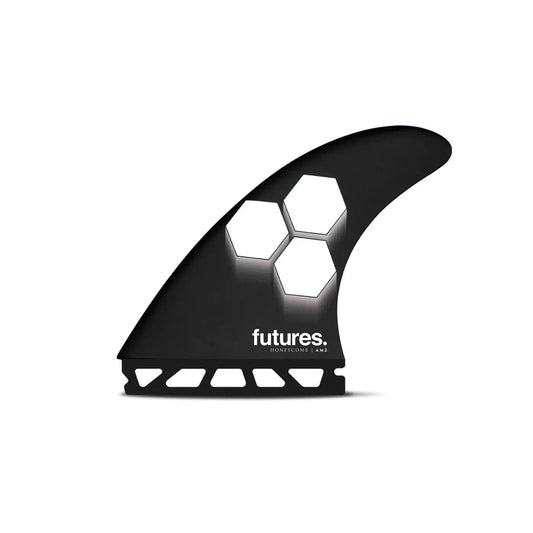
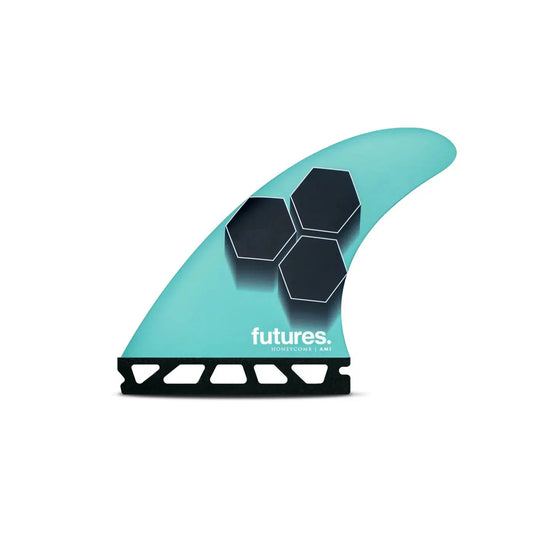
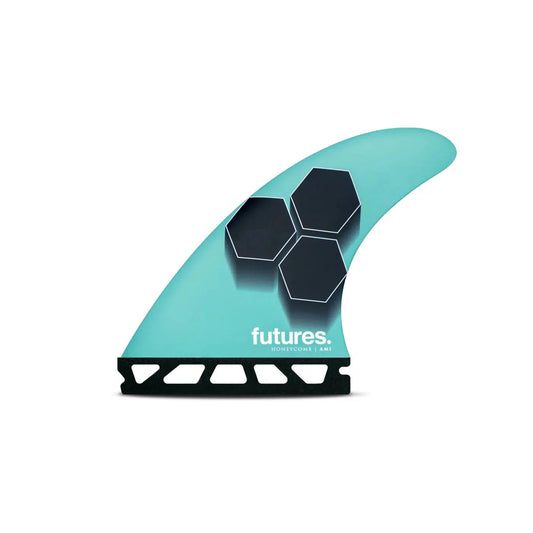

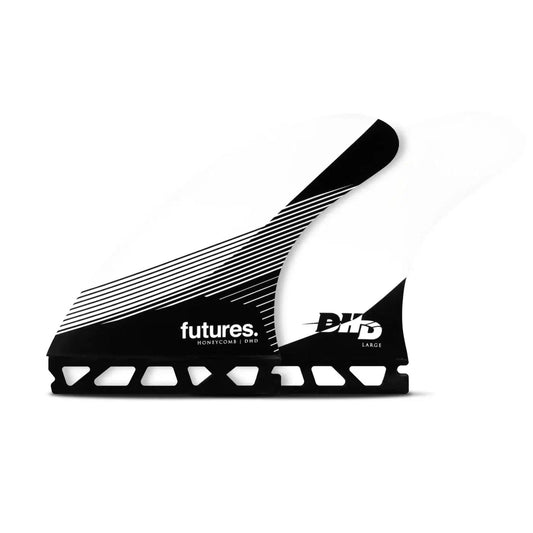

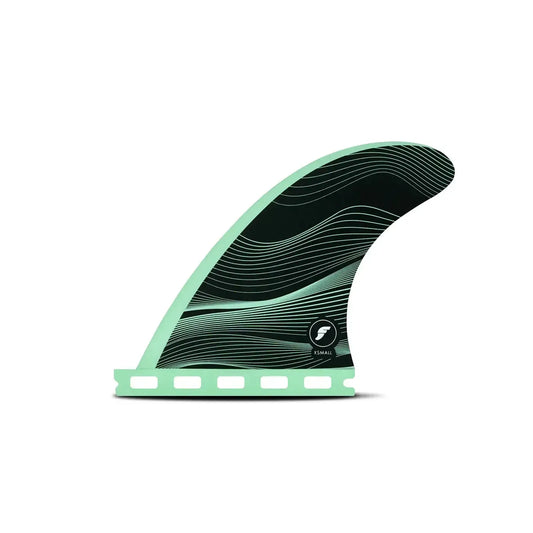


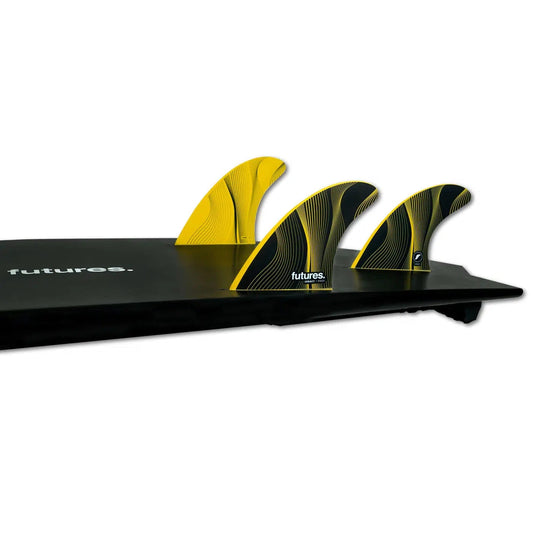


Futures Surfboard Fins
Futures Fins has been shaping the way surfers connect with their boards since 1996. Built around a full-base fin system that locks the entire fin into the box, Futures delivers a solid, direct feel that translates every movement into drive and response. It's the reason some of the world's best surfers have trusted Futures for decades.
The Futures system is engineered for performance. Because the full base of the fin sits inside the box rather than relying on tabs or clips, the connection between surfer, board, and wave is as direct as it gets. The result is more power through turns, more hold in critical sections, and a locked-in feel that gives you confidence to push harder.
Futures fins are available in a wide range of templates, flex patterns, and materials to suit every style of surfing. Whether you're riding a high-performance shortboard in punchy beach break, a step-up in overhead surf, or a twin or quad setup for something looser and faster, there's a Futures fin built for it. Materials range from fibreglass and honeycomb composites through to full carbon construction, each offering a different balance of stiffness, flex, and weight.
Sizing is straightforward — most Futures fins are categorised by surfer weight, so finding the right fit is a matter of matching your build to the template. From there, it's about dialling in the setup that suits your board and the conditions you surf most.
Shop the full Futures Fins range at Welcome Boardstore — Australia's home for premium surf gear.