


-
Futures Mark Richards Fiberglass Twin + 1 Fins
Vendor:FuturesRegular price $199.95 AUDRegular price -
Futures Christenson Fibreglass Twin
Vendor:FuturesRegular price $174.95 AUDRegular price -
Futures Son Of Cobra Twin - Black/Marble
Vendor:FuturesRegular price $159.99 AUDRegular price -
 Sold out
Futures Son Of Cobra Twin Fins
Vendor:FuturesRegular price $169.95 AUDRegular price -
 Sold out
Futures Al Merrick Twin + 1 Fins
Vendor:FuturesRegular price $169.95 AUDRegular price -
Futures Akila Aipa Fiberglass Twin+1 Surfboard Fins
Vendor:FuturesRegular price $199.95 AUDRegular price -
Future CoCo Fiberglass Twin + 1 Fins
Vendor:FuturesRegular price $199.95 AUDRegular price

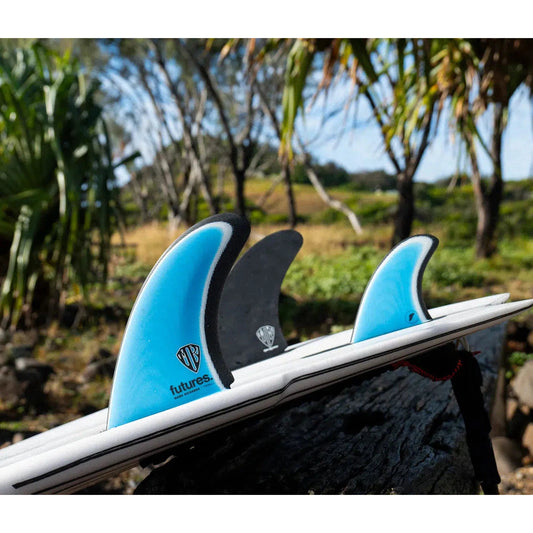

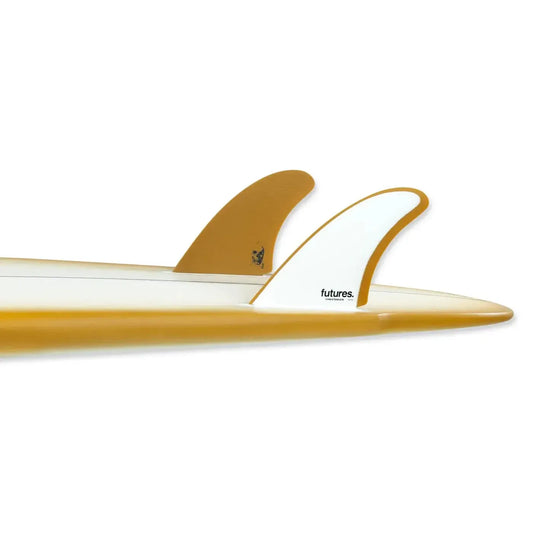


Twin Fin Surfboard Fins Australia
Twin fins are one of the most fun and distinctive fin setups you can ride on your surfboard. With just two fins and no centre fin, a twin setup completely changes the way a board feels underfoot — looser, faster, and more skatey than a thruster, with a flowing, drawn-out style that suits certain waves and certain surfers perfectly. If you've never ridden a twin, it's worth experiencing.
The defining characteristic of a twin fin is speed. Without a centre fin creating drag, water flows freely beneath the board and the result is a noticeably faster, more slippery feel through flat sections and down the line. That looseness is the twin's greatest strength and its biggest learning curve — the board wants to go fast and flow rather than pivot and snap, so your surfing naturally adapts to longer, more sweeping turns and a more relaxed, connected style.
Twin fins work best in smaller, softer surf where a thruster can feel stiff and unresponsive. A fish or retro twin in waist to head-high beach break is one of the most enjoyable setups in surfing — fast, fun, and effortless in the right conditions. They also pair well with mid-lengths and alternative shapes where the goal is flow and speed rather than vertical performance.
Twin fin sets are available in both FCS II and Futures compatibility, across a range of templates, flex patterns, and materials. Choosing the right twin comes down to the size of your board, the conditions you surf, and how loose or drivey you want the setup to feel. A larger, more upright template will give you more drive and hold, while a smaller, more raked template will feel looser and more pivoty.
Shop twin fin sets at Welcome Board Store — Australia's home for surf, snow, and skate gear.